
Find an offer that you cannot resist, and we will do everything to meet your expectations. Book now Choose one of our vacation offers and enjoy a relaxing vacation.
Find an offer that you cannot resist, and we will do everything to meet your expectations. Book now Choose one of our vacation offers and enjoy a relaxing vacation.
Pakoštane is an excellent base for exploring some of Croatia's most beautiful protected areas. Vransko jezero Nature Park begins right next to the village, and the Kornati, Krka, Paklenica, Plitvice Lakes and Northern Velebit national parks, as well as the Telašćica and Velebit nature parks, can be reached on a day trip. Please check opening hours and ticket prices on the parks' official websites before your visit.
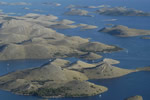
Kornati National Park was established in 1980. Covering about 217 km², it includes 89 islands, islets and reefs, the largest of which is Kornat. Bare stone islands, steep cliffs, hidden coves and crystal-clear sea make the Kornati a favourite with sailors and day-trippers; the park is visited by boat, either on an organised excursion or on your own vessel.
Official website: www.np-kornati.hr
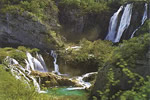
Plitvice Lakes was Croatia's first national park, established in 1949, and has been on the UNESCO World Heritage List since 1979. Sixteen named lakes follow one another, linked by waterfalls and tufa barriers that the water is still shaping today, and most of the park is covered by forest. The lakes can be explored on marked footpaths.
Official website: np-plitvicka-jezera.hr
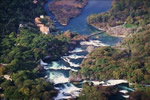
Krka National Park was established in 1985 and today covers 109 km² along the Krka river. Here the river forms seven tufa waterfalls, the best known being Skradinski buk and Roški slap. The park also includes the islet of Visovac with its Franciscan monastery and the Krka Monastery, while the picturesque town of Skradin lies at one of its entrances.
Official website: www.npkrka.hr
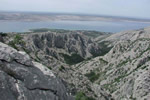
Paklenica National Park was established in 1949 and covers 95 km² on the southern slopes of Velebit. Its best-known features are the canyons of Velika and Mala Paklenica, and with around 600 equipped routes it is Croatia's most important climbing centre. The Manita peć cave is open to visitors, and the park's beech forests have been part of UNESCO World Heritage since 2017.
Official website: www.np-paklenica.hr
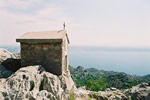
Northern Velebit National Park, established in 1999, is the youngest of Croatia's eight national parks. Its 109 km² include the Hajdučki and Rožanski kukovi strict reserve, whose beech forests have been on the UNESCO World Heritage List since 2017, and the Velebit Botanical Garden at Zavižan, protected as a monument of landscape architecture.
Official website: np-sjeverni-velebit.hr
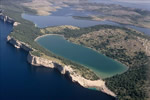
Telašćica Nature Park, established in 1988, lies in the south-east of Dugi otok and covers 70.5 km² of land and sea. Telašćica Bay, surrounded by 13 islands and islets, is one of the most beautiful natural harbours in the Adriatic. The park's highlights are the salt lake Mir and steep cliffs rising up to 161 m above the sea.
Official website: pp-telascica.hr
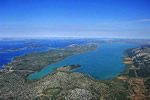
Vransko jezero Nature Park, established in 1999, stretches between Pirovac and Pakoštane. Lake Vrana is the largest natural lake in Croatia, and its north-western part has been a special ornithological reserve since 1983. Since 2013 the park has been on the list of wetlands of international importance (Ramsar). A 40 km cycling path runs around the lake, and the Kamenjak viewpoint offers a view of the entire lake and the islands.
Official website: www.pp-vransko-jezero.hr
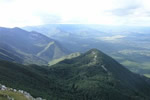
Velebit Nature Park, established in 1981, is the largest protected area in Croatia (1,829 km²) and covers the entire Velebit massif, Croatia's longest mountain range. Velebit has been a UNESCO biosphere reserve since 1978, and the Paklenica and Northern Velebit national parks lie within the nature park.
Official website: www.pp-velebit.hr